Disinformation & Emotional AI
The Research
Our work on disinformation sits at the intersection of two urgent problems: the global spread of false information online, and the rapid growth of AI systems designed to engage with intimate dimensions of human emotional life.
Led by Professor Vian Bakir, this research strand argues that disinformation is fundamentally an emotional phenomenon. False information circulates not because people are irrational, but because it is increasingly optimised — by algorithms, by political actors, and by commercial interests — to provoke exactly the emotional responses that make sharing, believing and acting on it more likely.
As AI systems become more empathic, more personalised, and more deeply embedded in everyday life, they create new conditions for this process to deepen. An AI companion that has learned your emotional patterns, that you trust, and that you have an ongoing relationship with is a uniquely powerful vector for the shaping of belief. This is the Lab's distinctive contribution to disinformation research: understanding not just how false information spreads, but how emotionally responsive AI systems change the landscape of epistemic vulnerability.
Key Themes
The economics and politics of emotion Commercial platforms optimise emotional content for engagement. Political actors optimise emotional content for persuasion. Both processes fuel the circulation of false information. Our research maps how these dynamics operate across different political and cultural contexts, from the United States to the Philippines to Sweden.
Empathic AI and the erosion of critical thinking AI partners and companions that build emotional rapport with users can reduce the motivation for independent verification. When you trust something — or someone — you are less likely to question what it tells you. IEEE 7014.1, the ethical standard developed with Lab input, explicitly addresses this risk under its recommended practices on sycophancy, false information, and self-growth.
Deepfakes and synthetic media AI-generated audio, video and imagery make it easier than ever to fabricate convincing false content. Our research examines the intersection of deepfake technology with emotional manipulation — particularly the use of synthetic empathic personas to build false trust.
Strategic political communication Political actors have long understood that emotion is the currency of persuasion. Our research examines how AI-assisted micro-targeting and emotional profiling are being used in electoral campaigns, and what regulatory and civic responses are needed.
Automated empathy attacks We have developed the concept of automated empathy attacks — the use of emotionally responsive AI systems to undermine a person's sense of reality, trust in others, and psychological security. This connects disinformation research directly to questions of AI design, governance and ethics.
Policy and Public Engagement
This research has reached well beyond academia. Our work has informed deliberations in the European Parliament, whose commissioned study on disinformation and the rule of law drew directly on Bakir and McStay's definition of fake news. In 2020, Bakir and McStay submitted evidence to the UK Parliament on Electoral Campaigning Transparency.
In December 2023, Professor Bakir appeared in the Royal Institution's Christmas Lectures — The Truth about AI — broadcast on BBC4 and freely available on the Royal Institution's YouTube channel, reaching audiences of teenagers, parents and educators across the UK and internationally.
Our research has also influenced professional political communicators, NGOs, trade unions, journalists, and artists working to understand and counteract the power imbalances created by emotional AI and disinformation.
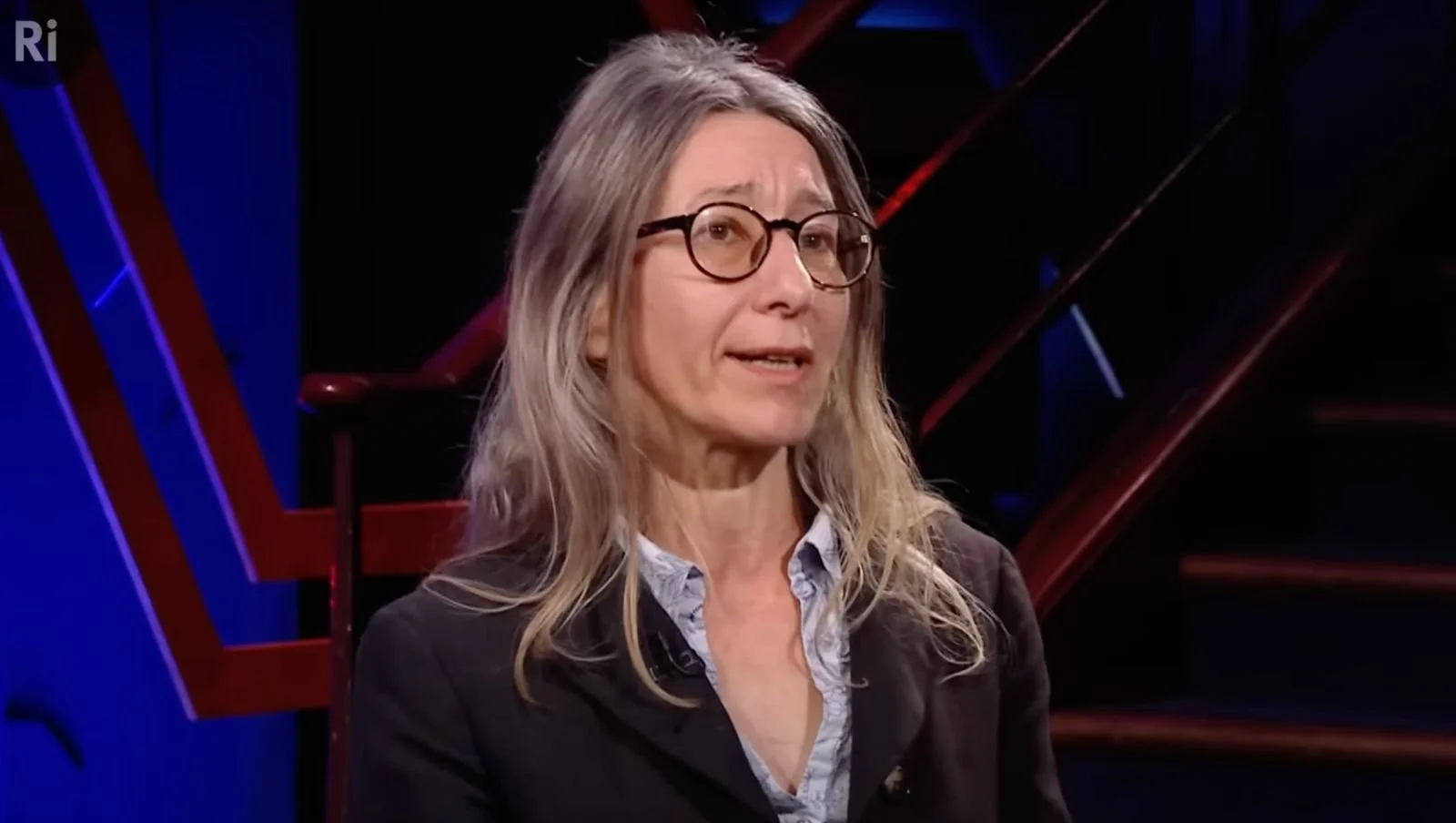
Professor Vian Bakir delivering disinformation and AI section for 2023 The Royal Institution's Christmas Lectures
Featured Work
Optimising Emotions, Incubating Falsehoods (Palgrave-Macmillan/Springer, 2022). Bakir and McStay's book provides a comprehensive account of how the datafication and optimisation of human emotion drives the circulation of false information through the civic body — and what multi-stakeholder responses are needed. The book is open access and freely available.

Collaboration
We welcome and are well versed in collaboration with researchers, journalists, policymakers and civil society organisations working on disinformation, AI governance and digital rights. If you are interested in partnering with us or would like to discuss our research, please contact Professor Vian Bakir or Professor Andrew McStay .